CLEAR Director
| Phone: | (860) 345-5228 |
|---|---|
| E-mail: | david.dickson@uconn.edu |
Core Team
| Phone: | (860) 345-5231 |
|---|---|
| E-mail: | renata.bertotti@uconn.edu |
| Phone: | (860) 345-5227 |
|---|---|
| E-mail: | kara.bonsack@uconn.edu |
| Phone: | (860) 345-5216 |
|---|---|
| E-mail: | cary.chadwick@uconn.edu |
| Phone: | 860-486-2436 |
|---|---|
| E-mail: | michael.dietz@uconn.edu |
| Phone: | (860) 345-5225 |
|---|---|
| E-mail: | Zbigniew.Grabowski@uconn.edu |
| E-mail: | qian.lei@uconn.edu |
|---|
Mary Looney
NEMO Municipal Stormwater Educator
Read Bio
| Phone: | 860-345-5215 |
|---|---|
| E-mail: | mary.looney@uconn.edu |
| E-mail: | jiff.martin@uconn.edu |
|---|
| Phone: | (860) 345-5226 |
|---|---|
| E-mail: | emily.wilson@uconn.edu |
Affiliated Faculty
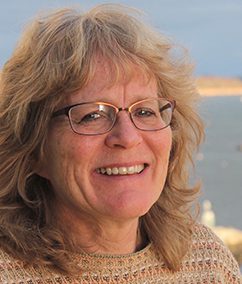
Nancy Balcom, Connecticut Sea Grant, Associate Director, Extension Program Leader
Nancy Balcom serves as the associate director and extension program Leader for Connecticut Sea Grant. As a senior extension educator with UConn Extension, she offers seafood safety training courses for processors, leads the LIS marine debris action plan effort and contributes to ongoing initiatives in marine fisheries, aquaculture and offshore renewable energy. Nancy’s faculty page.
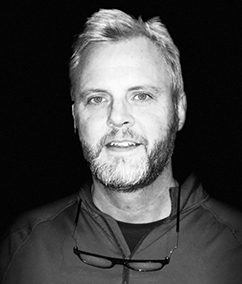
Todd Campbell, Department of Curriculum and Instruction
Todd is a Professor of Science Education in the Neag School of Education. His research focuses on cultivating imaginative and equitable representations of STEM activity, in both formal and informal science learning environments. Todd works with CLEAR faculty (and others) on several large NSF-funded projects, providing the education research firepower behind our natural resource/STEM outreach and instructional efforts. Todd’s faculty page.
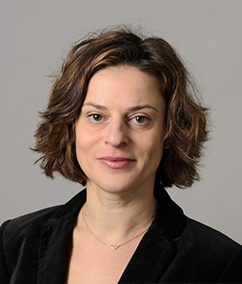
Maria Chrysochoou, Department of Civil and Environmental Engineering
Maria is Professor and Head of the Department of Civil and Environmental Engineering in the UConn School of Engineering. Her research expertise includes environmental geochemistry, contaminated site and brownfield remediation, beneficial use of industrial by products and recycled materials, and clay mineralogy. In addition, she is the Director of the Connecticut Brownfields Initiative. As the chief instructor of the Brownfields Corps class, Maria is a big part of the new Environment Corps project. Maria’s faculty page.
Laura Cisneros, NRCA Program Coordinator, Department of Natural Resources and the Environment
Laura Cisneros is a Program Coordinator of UConn's Natural Resources Conservation Academy (NRCA), and a Visiting Assistant Professor in the Department of Natural Resources and the Environment at UConn. She received her B.S. in Zoology at Michigan State University and her Ph.D. in Ecology and Evolutionary Biology at UConn. Laura's Ph.D. research explored the effects of human-modified landscapes on bat communities, and identified landscape characteristics that promote biodiversity and vital services provided by bats (e.g. pollination, seed dispersal).
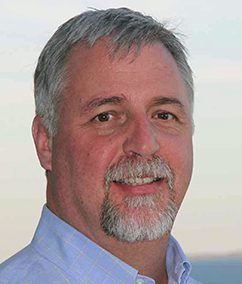
Sylvain DeGuise, Connecticut Sea Grant College Program
Sylvain is an Associate Professor in the Department of Pathobiology and Veterinary Science, but more important for CLEAR purposes, he is the Director of Connecticut Sea Grant. Sea Grant and CLEAR have been strong partners for many years and several CLEAR core faculty are also associated with Sea Grant (or visa-versa). Sylvain is a member of the CLEAR/Sea Grant climate resilience team. Sylvain’s faculty page.
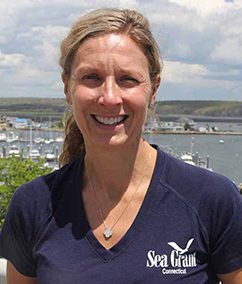
Tessa Getchis, Department of Extension and Connecticut Sea Grant
Tessa is a Senior Extension Educator and aquaculture specialist with Connecticut Sea Grant and the UConn Extension Program. Her focus is on shellfish husbandry, shellfisheries management and the aquaculture permitting process. CLEAR’s geospatial faculty work with Tessa on the Connecticut Aquaculture Mapping Atlas, an online tool to enhance access to information for fishers, the shellfish industry, and the regulatory community. Tessa’s faculty page.
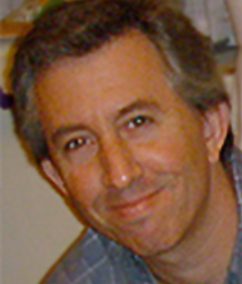
David Moss, Department of Curriculum and Instruction
David is Associate Professor and Director of Global Education in the Neag School of Education, specializing in curriculum studies and internationalizing U.S. teacher education. His current research interests are in the areas of global/international education, culturally sustaining pedagogies, and curriculum reform. David works with CLEAR faculty (and others) on several large NSF-funded projects, conducting research on natural resource/STEM outreach and instructional efforts. David’s faculty page.
Tom Worthley, Forestry Program, Forest Sustainability
Tom Worthley is Assistant Extension Professor at the University of Connecticut Cooperative Extension Service and the University of Connecticut Department of Natural Resources and the Environment. He has written a number of scholarly articles and also teaches courses in Forest Ecology and Management and Dendrology. He has worked extensively on tracts in the UConn Forest and beyond in both outreach and educational activities. Tom's faculty page.
CLEAR Emeritus
Core Team
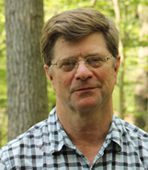
Chet Arnold
CLEAR Co-Founder & Director
Chet Arnold is an Extension Educator Emeritus and Co-Founder of CLEAR, where he served as the Co-Director from 2002-2015 and just plain old Director from 2016-2021. Chet joined the University in 1987 and has worked on the Long Island Sound Study Public Outreach Program, the NEMO Program, the National NEMO Network, CLEAR, the Natural Resources Conservation Academy, and the Environment Corps – all of which he helped to create. He has authored several national award-winning papers and has been Principal Investigator or Co-PI on over $25M of external grants. Chet retired from UConn in October 2021 but remains at CLEAR in a part-time contractual capacity, coordinating several projects - the largest of which is the Environment Corps - and in general making a nuisance of himself.
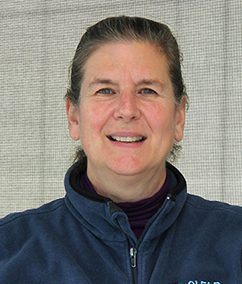
Juliana Barrett
Coastal Habitat/Resilience Educator, CT Sea Grant
Juliana Barrett was an Extension Educator with the Connecticut Sea Grant program at the Avery Point campus and a core team member of CLEAR. As an ecologist, her focus was the coastal habitats of Connecticut and climate adaptation. She worked with towns and groups throughout the state on the conservation and management of coastal areas and resilience of communities – both coastal and inland. She is currently being hired by Sea Grant in a part-time contractual capacity to continue some of this work, including her leadership of the Climate Corps, an undergraduate program in which UConn undergrads work with communities on climate adaptation projects.
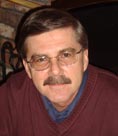
Daniel Civco
CLEAR Co-Director, Professor of Geomatics
Dan Civco is a Professor Emeritus of Geomatics in the Department of Natural Resources and the Environment at the University of Connecticut. Dan He has more than 35 years experience as an earth resources scientist and educator specializing in remote sensing and GIS applications. He has been involved extensively in research addressing both inland and coastal wetland resources, land use mapping and change analysis, impervious surface detection, and natural resources inventory and analysis. Further, he has been involved in algorithm development and refinement for processing remote sensing and other geospatial data. Dan was the Director for Research of CLEAR from its inception in 2002 until his retirement in 2016, and he is the founder of the Laboratory for Earth Resources Information Systems (LERIS). Dan cannot be replaced, but part of his legacy is a small cadre of remote sensing experts at UConn that continue to do innovative work in the Civco tradition.
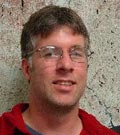
James Hurd
Research Associate, LERIS
James Hurd is a Remote Sensing Specialist for the University of Connecticut Department of Natural Resources and the Environment (NRE), and serves as the Director of NRE's Laboratory for Earth Resources Information Systems (LERIS). Established in 1982, LERIS is the principal center at UConn for conducting remote sensing and GIS research oriented toward natural resources, ecology, and the environment.
James received both his BS and MS degrees in natural resources from the University of Connecticut with a focus on remote sensing and geospatial technology. Research interests focus on the use of remote sensing and geospatial technology for the detection of land cover, land cover change and landscape characterization.
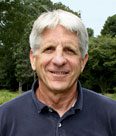
Bruce Hyde
Land Use Educator, UConn Extension
Bruce Hyde was a Land Use Educator for the University of Connecticut’s Center for Land Use Education and Research (CLEAR). He coordinated the Land Use Academy, which provides basic training for local land use commissioners. In addition, he provided technical assistance to communities in a variety of areas including reviewing land use regulations, affordable housing education and community outreach. He also co-taught the Climate Corps undergraduate program, along with Juliana Barrett.
Bruce is an AICP certified planner who has worked in the planning field for over 30 years. He has served in a wide variety of positions including city planner, regional planner, private sector consultant and local planning commissioner. He has a B.S. in Economics from Lehigh University and a M.S. in Natural Resource Planning from the University of Vermont.
Joel Stocker
Assistant Educator, UConn Cooperative Extension
Joel started with the NEMO program, CLEAR’s predecessor, as a graduate assistant within the College of Agriculture and Natural Resources. After graduating with a Masters in Natural Resources Management and Engineering in 1994 he continued full time with NEMO through the Cooperative Extension System. For the last 10 years of his career he spent most of his time working with the Extension Forestry team and the CLEAR Land Use and Climate Resilience Team. Over the years, Joel’s wide-ranging expertise in remote sensing, GIS, general computer IT and drone technology was critical to a long list of CLEAR projects. Joel has a bachelor’s degree in Mechanical Engineering from Michigan Technological University. Prior to joining the University Joel worked as an Engineer in the US Air Force, separating, honorably, as a Captain. His separation from CLEAR was no less honorable, although we are jealous that he gets to hike the beaches and woods and fly his drones all day.
Emeritus Affiliated Faculty
Mark Boyer, Board of Trustees Distinguished Professor, Geography Department
Mike O’Neill, Associate Dean of the College of Agriculture, Health and Natural Resources and Associate Director of UConn Extension
Bob Ricard, Senior Extension Educator, Department of Extension
Gary Robbins, Professor, Department of Natural Resources and the Environment